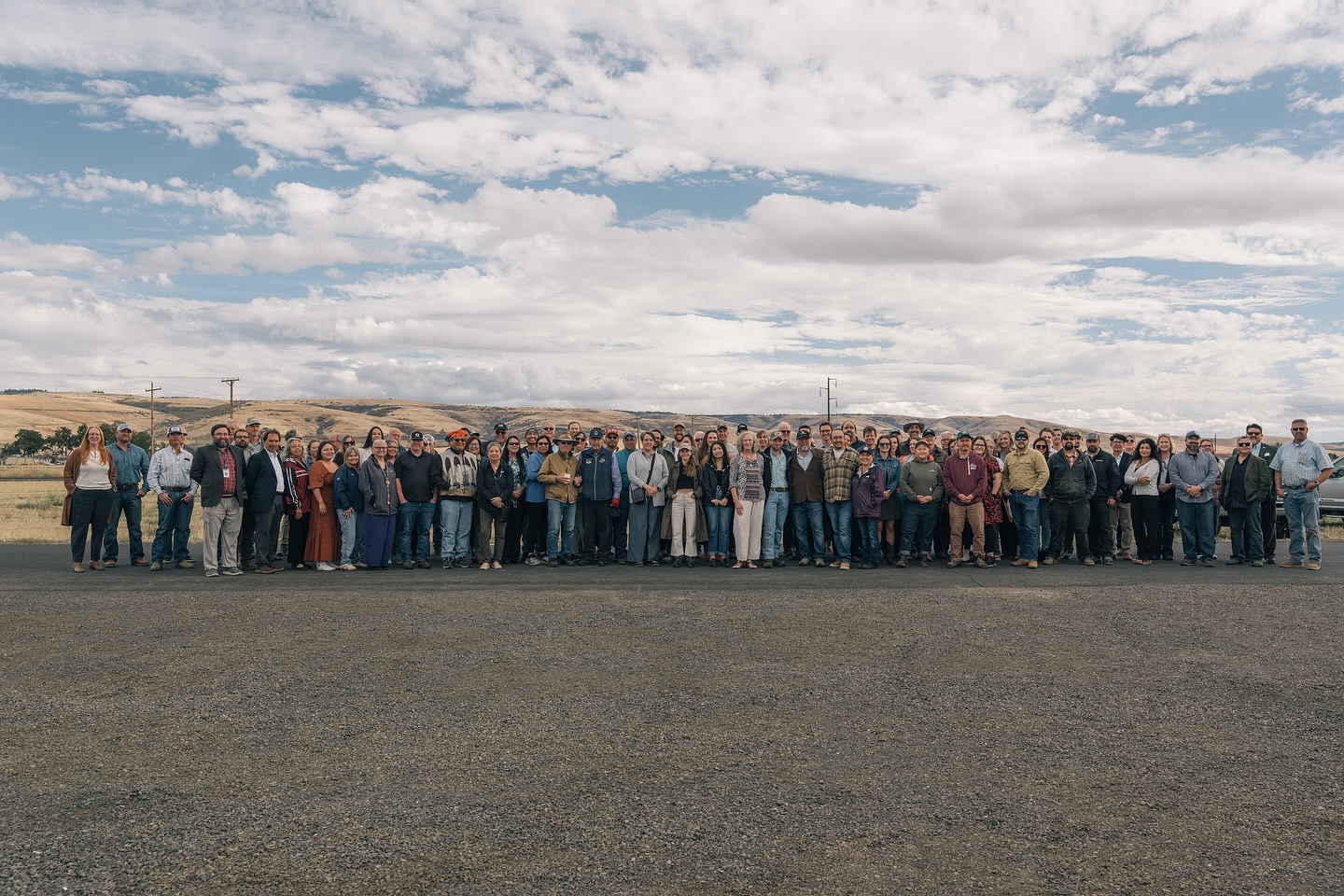
In impact finance, the challenge isn’t just finding great projects; it’s unlocking the capital to make them happen. This was the case for regenerative flour company Cairnspring Mills, whose growth had outpaced its infrastructure, and for the Confederated Tribes of the Umatilla Indian Reservation, which had a vision for economic development but needed the right partners to help bring it to life.
Capital weaving in action
Cairnspring Mills—a company we lent to previously—was ready to grow a second mill to process a larger volume of regeneratively grown wheat and meet growing demand. They found a willing and values-aligned partner in the Confederated Tribes of the Umatilla Indian Reservation to locate the new mill, but needed a substantial amount of capital to build it. While many pieces were coming together well, they needed a specific slice of $9 million in junior debt to help unlock other components of the capital stack.
The deal was compelling, but too big for any single interested party in our network. Knowing that we are stronger together, we approached this multi-million dollar opportunity with a “capital weaving” mindset, a concept our Co-founder and Chief Community Officer Lauren Grattan and Senior Director of Indigenous Futures Ted Piccolo first presented at Oweesta Corporation’s 10th Annual Native CDFI Capital Access Convening in Waikōloa Village, Hawai’i earlier in 2025.
Mission Driven Finance wove together a collective $9 million loan with eight Native Community Development Finance Institution (CDFI) partners. The weaving of this debt facility helped to unlock over five times the capital for the project in a complex capital stack of equity, multiple tranches of debt, and New Markets Tax Credits with several legal entities.
This structure and process enabled our eight Native CDFIs partners to participate meaningfully in large-scale economic development: Citizen Potowatomi CDC, Four Bands Community Fund, NACDC Financial Services, Native360 Loan Fund, Nimiipuu Fund, Nixyáawii Community Financial Services, Northwest Native Development Fund, and Oweesta Corporation. Peter and Jennifer Buffett’s NoVo Foundation and Terra Regenerative Capital are among the leading equity investors.
In addition to leading underwriting and structuring of the transaction, the Mission Driven Finance team held regular calls with weave participants to walk through deal points, open negotiation items, and how we thought about the opportunity in general. This approach to learning-by-doing ensured that our partners felt equipped to take this specific deal to their investment committees and will feel more confident with complex transactions involving tax credits in the future.
The magic in the weave
“This deal is a blessing for our community, especially after the local flour mill burned down in recent years,” said Dave Tovey (Umatilla), executive director of the Umatilla Tribes’ Nixyáawii Community Financial Services. “It not only integrates our Tribe into the production chain but also showcases a new era for Native economic development. With eight Native CDFIs in the game, this project is exciting and inspiring for the future. We’re showing that by working together, we can create transformative impact for Indian Tribes nationwide.”
As Ted (Confederated Tribes of the Colville Reservation) puts it, “The more you have out the door, the more you can bring in. This deal unleashes the financial capacity of Native lending institutions while directly impacting their communities. This transaction is but the next step in using capital to rebuild the ancient trade routes that Native and Indigenous people created to exchange goods and ideas.”
For Kevin Morse, CEO of Cairnspring Mills, the deal is more than just a financial transaction. He describes the experience as “surreal, gratifying, exciting, and daunting all at once.”
Kevin believes capital weaving is the future of regenerative businesses and Indian Country, as it prioritizes community resilience and food sovereignty over a purely financial-only ROI. The way this investment was structured aligns with Cairnspring’s business model, which embodies a “back to the future” approach, combining modern technology with the ancient stone milling and reflecting a model of community support that he believes is missing from conventional finance.
“There’s magic in the weave,” Kevin said. “People share their risk. People bring their communities and networks, which really build a powerful foundation for not just the deal, but the business.”
Many stakeholders, many impacts
For the people on and around the Umatilla Indian Reservation, the project has the potential to bring multiple benefits:
- Economic opportunity: The new mill is projected to generate over $50 million in annual revenue and create more than 20 new jobs in the region. Local farmers are projected to earn over $20 million per year from regenerative wheat production.
- Community empowerment: The Tribe receives equity ownership and a long-term lease, aligning the project with their goals of economic development and food sovereignty.
- Workforce development: Cairnspring is also partnering with Blue Mountain Community College to create a mill training program to support workforce development.
- Environmental impact: By processing grain closer to where it’s grown, the mill significantly shortens supply chains and reduces the carbon footprint associated with transportation.
“This is leveraging capital,” said Pete Upton (Ponca Tribe of Nebraska), executive director of the Native360 Loan Fund and chairperson and CEO of the Native CDFI Network. “Bringing big deals like this and being able to increase the asset size of your organization makes a big impact and helps grow the smaller CDFIs to scale. You couldn’t ask for better partners.”
“Being able to really build relationships and partnerships and bring people together to do larger-scale economic development projects on reservations is a pivotal moment for Native CDFIs,” said Jamie Olson (Nez Perce), Chief Lending Officer at Oweesta Corporation. “There’s a large learning curve, but what’s been beneficial is that organizations such as Mission Driven Finance can mentor participants through the process, and that’s been very helpful to build their own internal policies to do this type of lending. If we can pull our resources together, we can make big projects happen. You are actually making transformational change in Native communities.”
This project shows that large-scale, impactful projects are possible with creativity and collective power. Together, we can build an economy that works well for all. We are proud to co-create this model and are actively identifying additional large-scale projects that can benefit from the capital weave approach to bring in Native lending partners who believe in the future of Indian Country.
Disclosure: The experiences described above reflect the perspectives of multiple individuals, including participating lenders. These accounts are shared solely for informational purposes. No compensation or incentives were provided in connection with the experiences shared.